
By María Laura Carrizo Morales
Glaciers and periglacial environments are ecosystems of great biological and environmental value, serving as freshwater reservoirs, climate regulators, and the backbone of numerous regional economies throughout the western part of our country.
The Argentine Constitution stipulates that the federal government must establish minimum standards for environmental protection (Art. 41), ensuring uniform standards throughout the country. This regulation has a clear rationale: to protect the natural resources that belong to all of us and that know no provincial boundaries or borders.
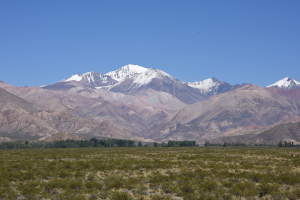
In arid regions, glaciers act as natural water regulators, making it possible for agricultural oases to thrive in the middle of the desert. These ice masses feed watersheds that support the cultivation of walnut trees and grapevines, which are key drivers of the local economy.
The Glacier Law, enacted amid social struggles, has established itself as an exemplary international standard and a model for social action and participation. The Executive Branch’s proposed amendment seeks, through various strategies, to weaken this environmental regulation, and this weakening does not entail a simple legislative reform, but rather an alteration of the rules that protect water, an essential resource for the sustainability and development of present and future generations.
The proposed amendment weakens the protection system established by the Glacier Law, as it seeks, among other things, allow local authorities to determine which glaciers or periglacial areas should be protected based on the criterion of hydrological relevance, disregarding other essential criteria such as water regulation, ecosystem functions, and scientific and social value (Art. 3). This decision also deviates from the technical and scientific criteria established in the Glacier Inventory prepared by the competent federal technical agency, the Argentine Institute of Snow Science, Glaciology, and Environmental Sciences (IANIGLA). In this way, it violates the entire uniform environmental protection system established in Article 41 of our National Constitution.
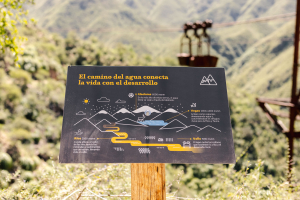
Meltwater rivers depend directly on the health of glaciers to maintain their flow during dry seasons. Without this constant supply of fresh water, the regional fruit-growing and wine-producing economies of western Argentina would collapse due to a lack of water for human and industrial use.
Furthermore, as indicated in the proposed Article 4, this opens the door for provinces to make arbitrary decisions without technical or scientific basis, as they are permitted to deviate from IANIGLA’s recommendations
Furthermore, the proposed Article 5 modifies the absolute prohibition on activities that could alter their natural condition, or the functions of strategic water resource reserves, their integrity, or their ecosystem function, among others: a) The release, dispersion, or disposal of pollutants, chemicals, or waste of any nature or volume (…); b) The construction of architectural or infrastructure works, with the exception of those necessary for scientific research and risk prevention; c) Mining and hydrocarbon exploration and exploitation (…); d) The establishment of industries or the development of industrial works or activities. The application of this article is subject to the determination of the provinces, thereby eliminating the general prohibition, making clear the need to move forward with extractive projects in areas that are currently protected.
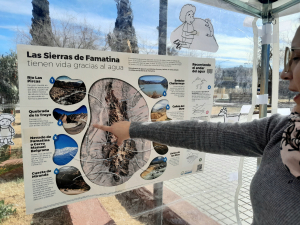
The Famatina River is home to debris glaciers that act as natural water regulators, enabling the existence of agricultural oases in the middle of the La Rioja desert. These ice masses feed watersheds that support the cultivation of walnut trees and grapevines, which are key drivers of the local economy.
This amendment comes amid climate change, a context in which glaciers play a fundamental role in water regulation, and any rollback of the protection levels achieved would undermine the international commitments made in this area.
The mountain provinces face profound and structural economic challenges. However, framing development exclusively in terms of extractive industries overlooks other sustainable productive alternatives that depend, precisely, on water conservation: regional economies, agriculture, tourism, local production, and activities that sustain entire communities. These are development alternatives that prioritize social, economic, and environmental sustainability.
At Natura Argentina, we work in regions threatened by large-scale mining: La Rioja, Catamarca, Mendoza, and Salta are just a few of the regions seeking to overcome the false dichotomy between environmental protection and development, and which hold endless possibilities for sustainable social, economic, and environmental development. Protecting water is not an obstacle to growth; it is what makes growth possible.
This legislative setback also represents a major step backward for collective agreements on water management and a blow to regional economies that rely heavily on water.
Under these circumstances, the proposed amendment to the Glacier Law is unconstitutional and illegal; it reduces current protections and undermines the system of minimum standards.
It is illegitimate, as it lacks the necessary scientific and social consensus. Above all, it entails a number of serious risks not only to the current and future security of the water supply for human consumption, but also to the sustainability of regional economies. The protection of glaciers is not a sector-specific issue; it is a decision regarding the development model and the present and future guarantees of the right to water.
●

